It’s an all too-common occurrence. A wind or hailstorm hits a community, damaging city-owned rooftops, vehicles, and outbuildings. When city officials submit an insurance claim for the damaged property, they learn that not only were some of the buildings inadequately insured, but some weren’t even listed on the coverage documents and so would not be eligible for any claim or cost of replacement.
Clayton Luther and Scott Fox, property valuation specialists with the League Association of Risk Management (LARM), see examples of underinsured Nebraska cities all the time. That’s why, when a city or village in Nebraska becomes a member of LARM and obtains its property coverage through them, one of the first LARM staff members to visit the community is Luther or Fox. Their job is to determine exactly which property the city owns and, as closely as possible, to estimate how much it would cost to rebuild or replace. It’s a huge job: 24 new members have been added to LARM’s total of 265 over the last year alone, and all their buildings need to be accurately measured and valued. To Luther and Fox, the job is exhausting but rewarding.
“There has not been a time when we’ve gone into a city, and they’ve had everything listed correctly on their coverage. We always find at least one building or facility that had been previously overlooked. Many times, it would have been disastrous for the town if a fire or storm had destroyed those uninsured or underinsured buildings. I go into the city and say, ‘I’m not selling anything. I’m here to find everything,” Luther said. He emphasized that a relationship based on communication and trust is important when doing valuations in a city or village.
He ought to know. Luther has been at the job for over 15 years, crisscrossing the state and often spending days in a municipality to determine its correct property valuation. As part of the process, he may drive around with a member of the city’s staff, who will help him identify what the city property includes.
“Our goal is to communicate so that property values and coverages are determined before the storm, as it’s too late after the damage is done,” Luther said.
Luther, who will be retiring from LARM as of June 30, has been training Fox over the past year to conduct property valuations in LARM member cities.
Fox, in turn, has added global positioning system (GPS) maps to help determine some measurements of member property but many times, the measurements still are taken with a measuring wheel or measuring tape. City records might also be reviewed to find building specifications.
Luther and Fox take the opportunity when they’re doing valuations to educate city officials about valuation terms, such as “functional replacement cost” - what it would cost to build a new facility that might not have the antique woodwork of the current structure, but would serve the same function.
Both Luther and Fox had previously worked in education for over 30 years, so they enjoy explaining the various aspects of valuations to LARM members.
“There are business decisions to make. You may think that old park shed may not be worth insuring and yet a small premium may make sense as a new shed is costly and would have to be built to hold whatever was stored in the old shed,” Luther said.
As years go by, city/village clerks and village boards change as do property costs. That’s why LARM has a new valuation done in each of its members’ communities every five years.
“We update the values, the photos of the buildings, and occasionally identify a new building or construction that the member had forgotten to report to us. City staff members have to wear a lot of hats, and we know that things can be overlooked,” Fox said.
To update replacement costs, the men may contact companies that produce water towers or playground equipment. The rising price of steel and other construction costs have increased the valuation costs on many buildings. In some cases, Fox will go to the local courthouse to find county-based valuations.
It’s worth the effort as property valuations can make or break a city if they have a storm or fire disaster.
“Look at your coverage documents. Make sure they’re up to date and accurate. Communicate with your agent now about your city or village property valuation as it’s too late to make those changes after the disaster,” Fox said.
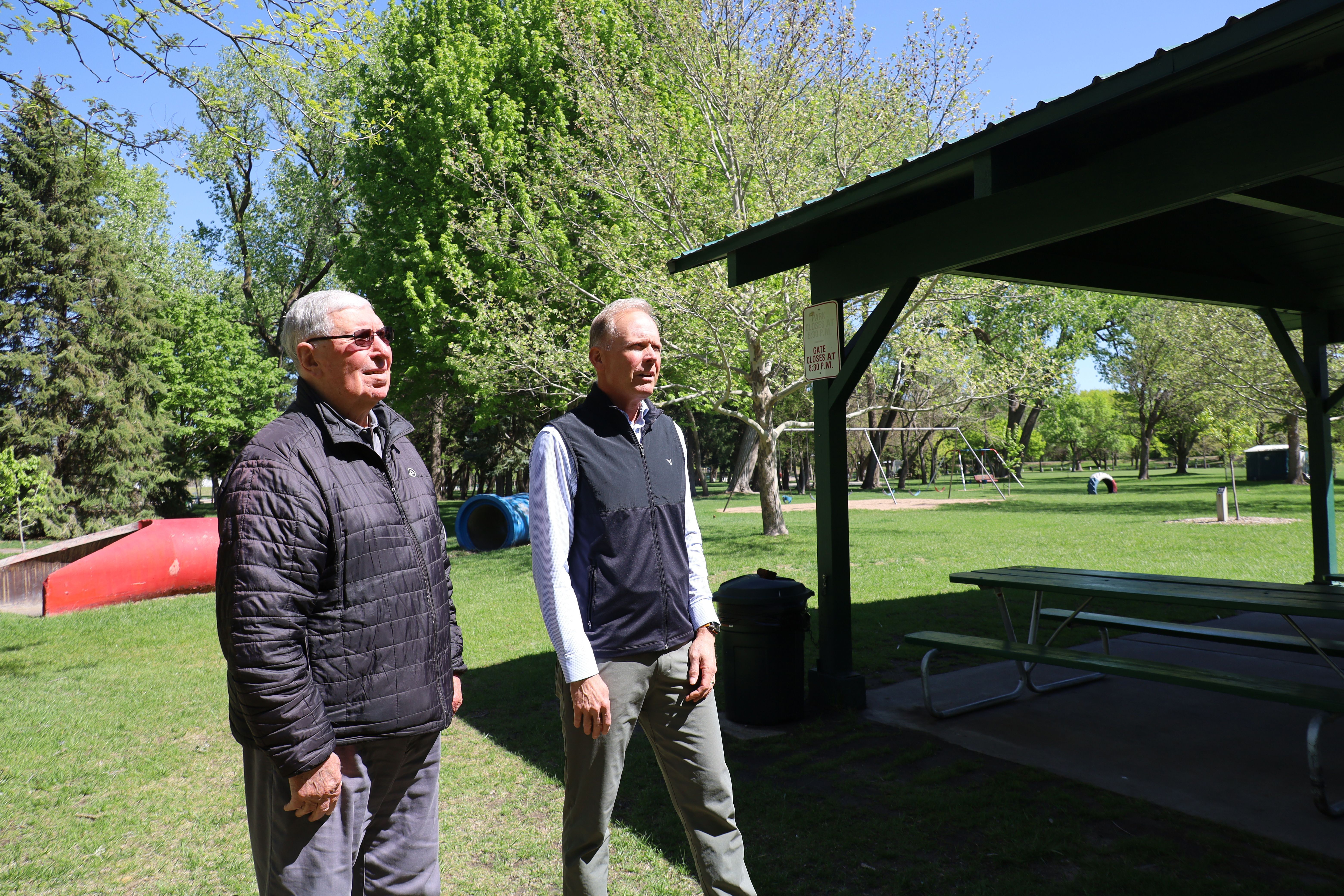
Pictured from the left are Clayton Luther and Scott Fox.


