Animal bites involving municipal employees have been increasing in recent years, making prevention more important than ever. Public servants such as meter readers, utility crews, maintenance workers, and first responders regularly encounter domestic and wild animals in the field.
From 2021 to 2025, LARM experienced 72 animal bite-related injury claims totaling close to half a million dollars in paid losses, with a notable surge in 2024 and 2025 (22 and 20 claims, respectively). This is nearly double the historical average and is accompanied by a significant increase in overall losses. These trends highlight both the high frequency and severity of these incidents, making dog bites one of the costliest injury types.
Understanding animal behavior and using the right tools and response strategies can help prevent injuries. Most animals show warning signs before becoming aggressive, and recognizing these cues is essential. Common red flags include a stiff or tense body, raised fur along the back, and prolonged eye contact. Growling, barking, hissing, or snarling signal agitation, while bared teeth or flattened ears indicate increased risk. Movement is another key indicator. Lunging, charging, or trying to move behind you may suggest an attack is imminent. Animals are often more defensive when protecting food, offspring, or territory. Animals that appear disoriented, drool excessively, or act unusually aggressive may be sick and pose a greater risk.
To stay protected, public servants should rely on both safe work practices and proper equipment. Basic personal protective equipment such as thick gloves, long sleeves, durable pants, and sturdy boots can help reduce injury severity. Other useful tools and methods include:
• Animal deterrent sprays such as pepper spray
• Noise deterrents like air horns or whistles
• Barriers such as vehicles, tool bags, clipboards, or garbage can lids
• Animal control tools such as catch poles or nets
• Maintaining awareness, keeping a safe distance, and identifying escape routes
Good habits in the field are just as important as having the right gear. Avoid surprising animals whenever possible. Announce your presence before entering a property and look for signs of animals before exiting your vehicle or entering a yard. Clues may include chains or tie outs, worn paths, kennels or doghouses, food and water bowls, toys, animal waste, or posted warnings such as “Beware of Dog.”
Body language also plays an important role. If confronted by an aggressive animal, stand slightly sideways instead of facing it directly, avoid prolonged eye contact, and move slowly. Stay calm and DO NOT RUN, as this can trigger a predatory chase response. Stand your ground, use a firm voice, and give simple commands like “No,” “Stay,” or “Back,” while slowly backing away. Use available objects as barriers when possible.
If an attack occurs, your priority is to protect yourself and minimize injury. Stay curled up with your chin tucked and hands covering your head, neck, and chest, keeping movements minimal and controlled. Use nearby objects like a bag or clipboard as a shield. Call for help only when safe, such as when the animal backs off or assistance is nearby, and avoid loud shouting if it increases aggression.
If you are bitten or injured, act quickly. Move to a safe location and wash the wound with soap and water for at least five minutes. Apply pressure to control bleeding and seek medical care promptly. Report the incident according to your organization’s procedures, including details about the location, animal, owner, and circumstances. Follow up care is important to address infection risks such as rabies and tetanus.
Municipalities can further reduce risk by providing training on recognizing animal behavior, establishing clear procedures for working around animals, coordinating with animal control, and tracking high risk locations.
Staying aware, prepared, and calm can make all the difference. Recognizing warning signs early and following safe work practices can help public employees avoid animal attacks and stay safe on the job.
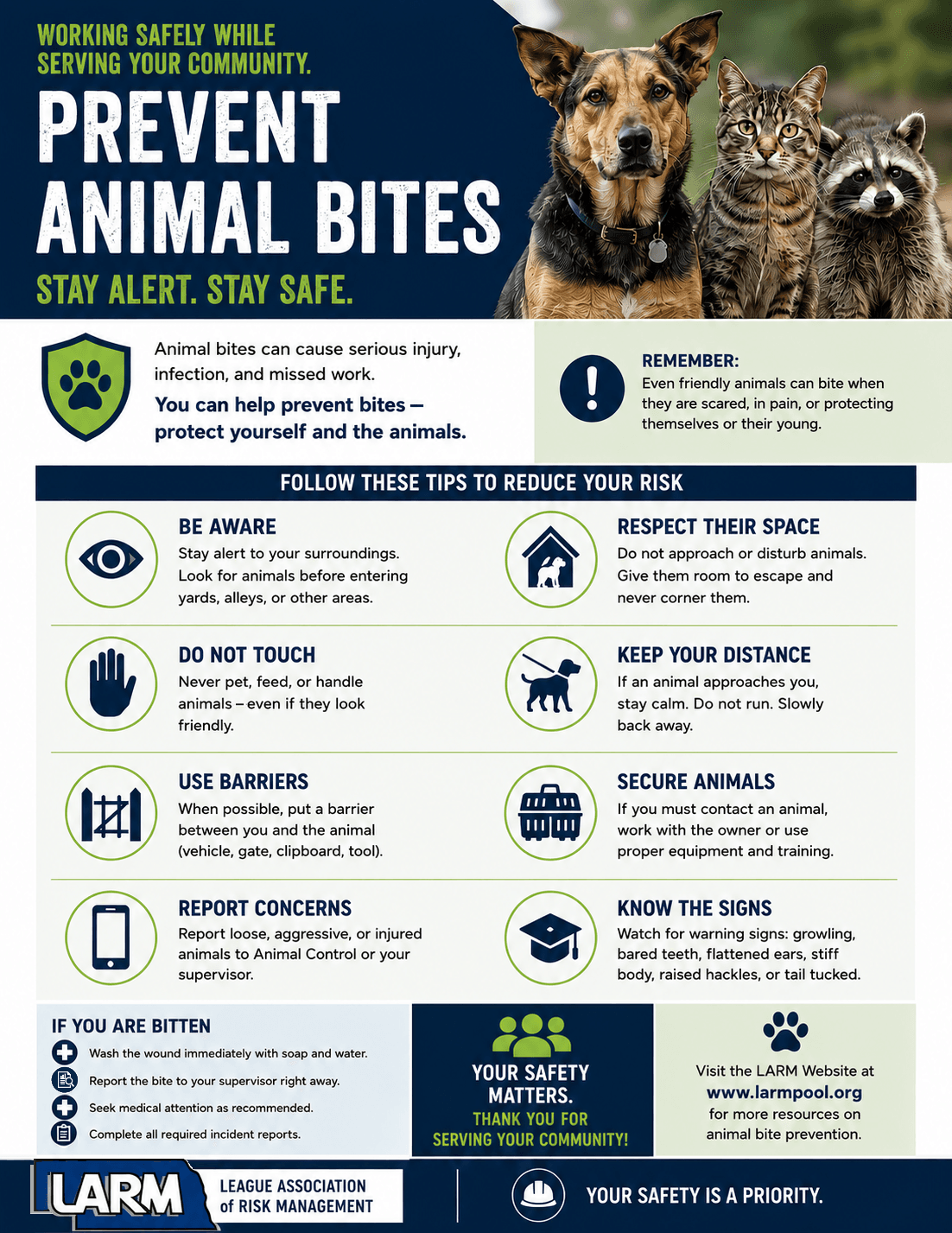
Here is a poster to help remind workers about how to prevent animal bites.


